



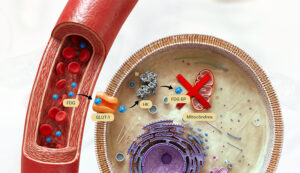
Uptake
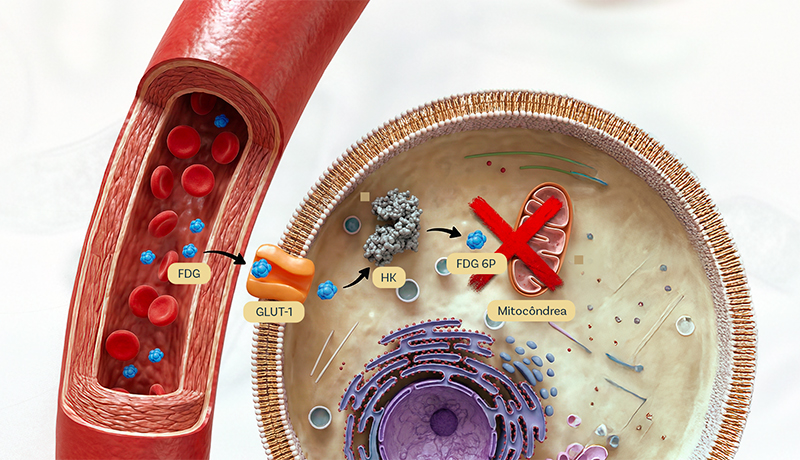
FDG is a molecule with a structure very similar to the glucose that cells consume to generate energy (ATP). Upon coming into contact with this molecule, the cell cannot differentiate between the two. Thus, the radiopharmaceutical enters the cytoplasm through transport proteins in the cell membrane (such as GLUT1).
Hexokinase
Once inside the cell, it is acted upon by the enzyme Hexokinase (HK), just as ordinary glucose would be. This results in the addition of a phosphate group, transforming it into FDG-6P.
Metabolism
Unlike glucose, the fludeoxyglucose molecule cannot proceed through the subsequent steps of metabolism to generate energy; therefore, it remains trapped inside the cell for a longer period.
Fluorine-18
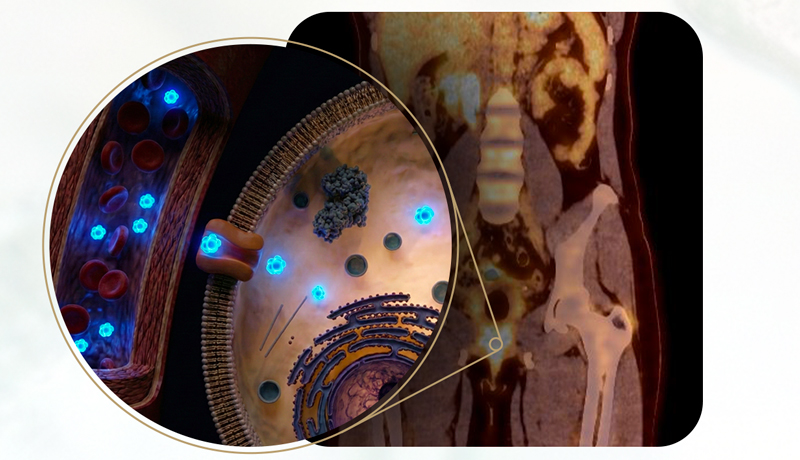
FDG-6P carries Fluorine-18, a radioisotope, within its structure. Since tumor or inflamed cells consume significantly more energy than healthy ones, they take up more glucose; consequently, they end up absorbing more FDG molecules and trapping a larger quantity of this radioactive isotope.
Fluorine-18 is an emitter of particles called positrons. Inside the body, a positron annihilates with an electron, generating photons. When the PET scanner detects these photons, it is possible to locate where the highest accumulation of FDG occurred, revealing the existence and exact location of the lesion.